

Nuclear projects are a strong driver of further investment
Famak is expanding its supply activities for the nuclear power sector while continuing to manufacture steel structures and industrial equipment. In this interview, Leszek Zagórski, President of the Management Board, discusses the nuclear sector’s requirements, production organisation and plant modernisation.
You have qualified as a Westinghouse supplier and implemented NQA-1. What was the most important change in your production organisation to meet the nuclear sector’s requirements?
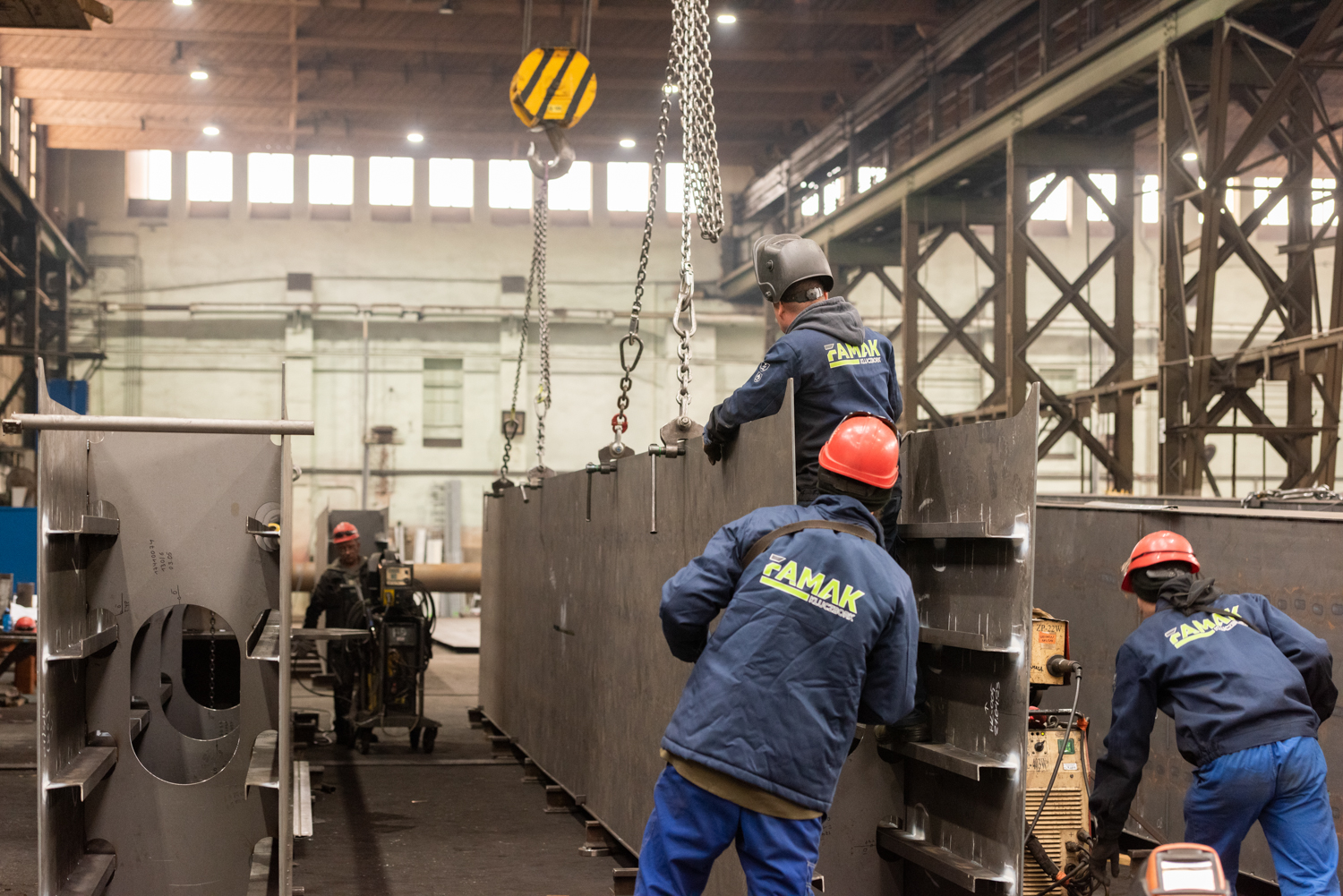
FAMAK was already well prepared in terms of its working culture and quality of workmanship. For years, we have supplied large-scale steel structures and equipment operating in demanding conditions, including cranes for coastal terminals exposed to harsh weather and sea salt. Being selected as one of seven companies from Poland confirms these capabilities. However, nuclear projects entail enormous responsibility at every stage of production, along with extensive requirements for procedures, inspections and documentation. The most demanding task was changing ways of working established over many years and adapting our production organisation to this level of rigour.
In Kluczbork, you design and manufacture equipment from the first sketch to the final weld. Why do you keep this entire process in-house?
We supply solutions for demanding customers and applications. Our equipment handles enormous loads, often operates in difficult conditions and must ensure safety and reliability for many years. That is why we carry out the key stages of design and production in-house. This allows us to control quality at every stage, while direct collaboration between design engineers, manufacturing engineers and production teams enables us to solve problems quickly. This is how we take responsibility for the finished equipment and its performance.
Your offering includes complete bulk material handling systems as well as individual machines. Which type of order currently matters more in terms of capacity utilisation at your plants?
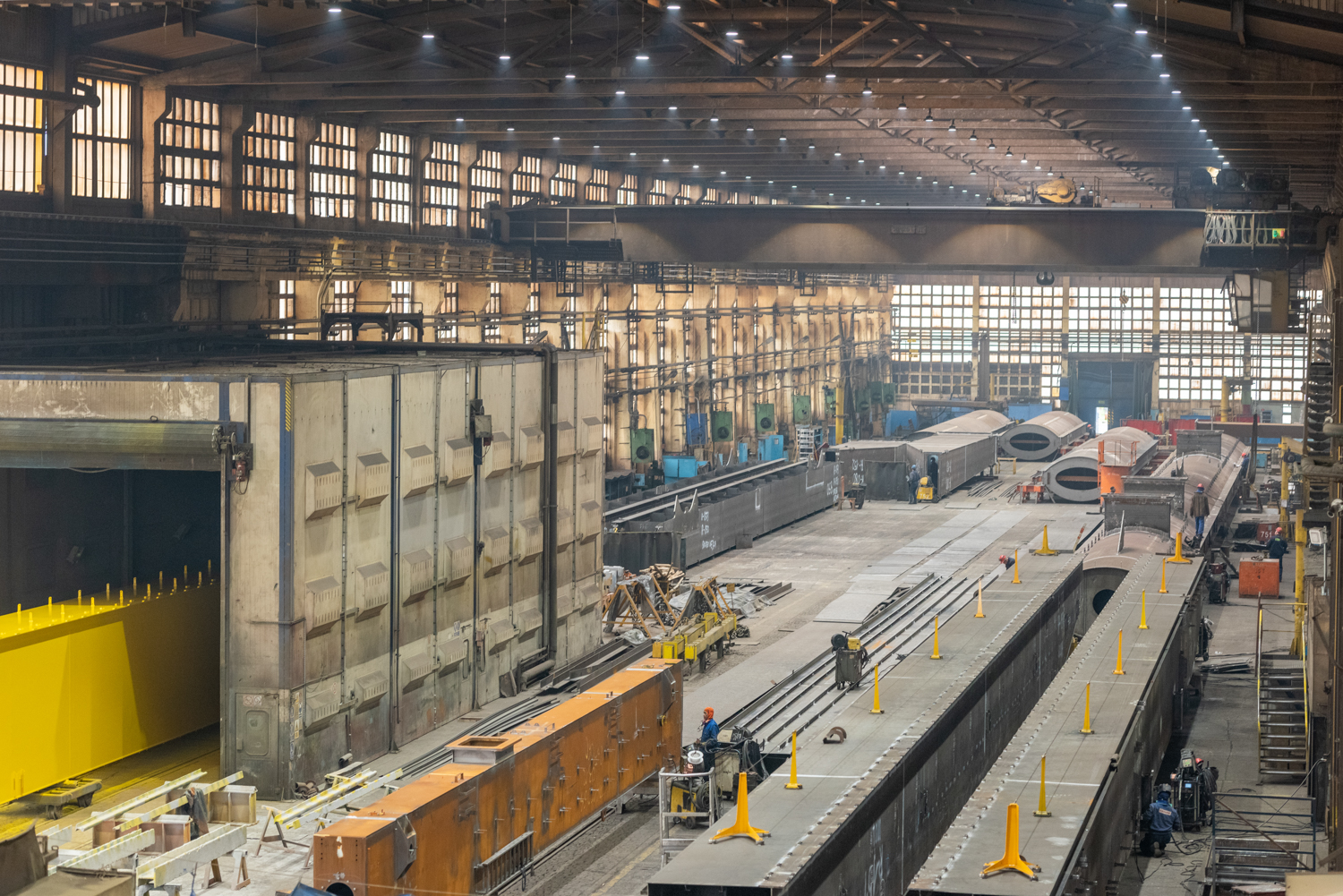
We currently manufacture large-scale steel structures, including crane structures weighing up to 600 tonnes, as well as conveyor systems. We also produce smaller structures and provide services, including steel machining. All these orders are important and complement one another. Large, long-term projects keep the plant busy for many months, while smaller orders and services allow us to fill gaps in the schedule and deploy our people and machinery flexibly. It is precisely this combination that allows us to manage production efficiently.
You have been operating in heavy industry for eight decades. What kinds of investment projects are you planning to adapt the plant for so that you can expand supplies to the nuclear power sector alongside the production of cranes and handling systems?
FAMAK played an important role in the industrialisation of Poland’s coal-based economy. Today, it can become part of another major transformation—the development of nuclear power. This direction fits perfectly with our strategy: we are modernising the plant, upgrading our machinery and developing our employees’ skills. Nuclear projects are a strong driver of further investment, training and the acquisition of new know-how. We will also use the skills we gain and our new production capabilities in the manufacture of cranes, handling equipment and other orders.
Interview: Compabase editorial team
Answers: Leszek Zagórski, President of the Management Board Famak